Learn abot Car Transport
Introduction
Car transport sounds simple until the questions start piling up: which trailer fits the load, where can you find a trustworthy dealer, and how do you keep recovery costs under control when a vehicle will not move? These decisions matter to private owners, small traders, workshops, and collectors because one poor choice can waste money, delay handover, or damage a car that already needs attention. This guide brings the moving parts into focus before the small details become expensive.
Outline:
1. How to find a car trailer dealer that matches your real transport needs.
2. What a dealer center does and why it matters in buying, selling, and moving vehicles.
3. How to compare trailer ownership, rental, and professional transport services.
4. What cheap car recovery really means, including costs, risks, and smart savings.
5. A practical conclusion for owners, traders, and workshops that need dependable vehicle movement.
Finding a Car Trailer Dealer That Matches the Job
Searching for a car trailer dealer is not just a shopping task; it is a matching exercise between vehicle, trailer, tow car, road conditions, and budget. Many buyers begin with deck length and price, yet the better starting point is payload. Payload is the amount of weight the trailer can legally carry after the trailer’s own weight is taken into account. A dealer worth trusting should ask what you plan to transport, how often you will use the trailer, what towing vehicle you already own, and whether the load is operable or non-running. If the conversation jumps straight to a price tag without these questions, that is usually a warning sign.
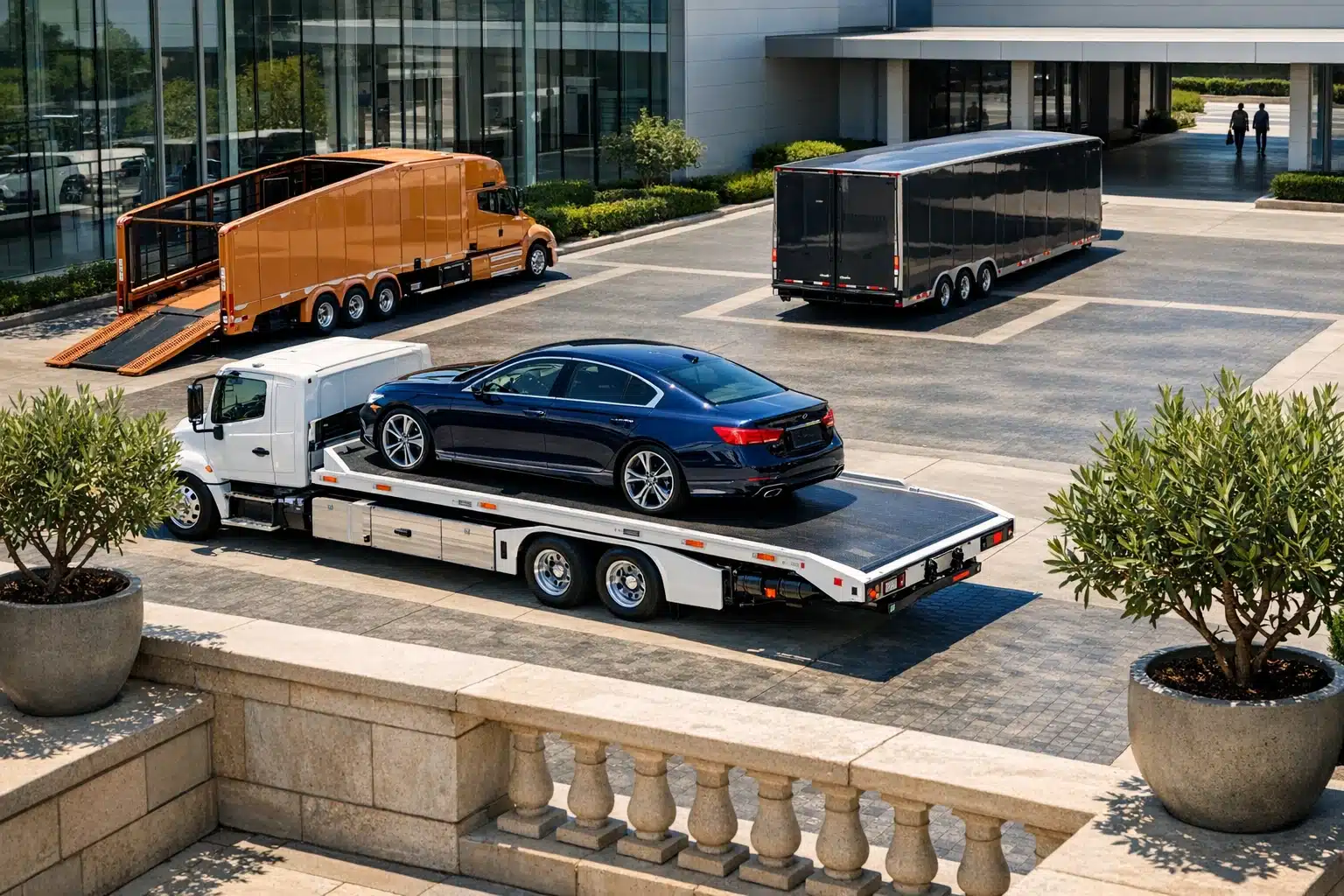
A strong dealer will explain the differences between common trailer types in clear language. A single-axle model may suit lighter and less frequent jobs, while a tandem-axle trailer usually offers better load distribution and stability for heavier vehicles. Tilt-bed trailers reduce the need for long ramps, which can be especially useful when loading low-clearance cars. Enclosed trailers add protection from weather and road debris, but they also cost more and require more storage space. Open flatbeds remain popular because they are simpler, cheaper, and easier to inspect during loading. The right answer depends on whether you are moving a family hatchback once a year, a restoration project every month, or several trade vehicles across long distances.
When comparing dealers, practical details matter more than polished advertising. Ask about frame construction, axle rating, brake systems, tire specification, parts availability, and warranty support. A shiny trailer on a forecourt can smile like a salesman; the weld quality tells the real story. Good dealers usually welcome inspection and provide documentation instead of dodging basic technical questions.
Useful checks include:
– gross vehicle weight rating and legal payload
– compatibility with your tow ball, hitch, and electrical connection
– winch options for non-running cars
– spare wheel availability
– after-sales support for brakes, lights, bearings, and ramps
It also helps to compare local dealers with larger regional sellers. Local dealers may offer more personal support and easier servicing, while bigger operations sometimes provide broader stock and quicker access to parts. Reviews can help, but they should be read carefully. A complaint about delayed paperwork is not the same as repeated reports of axle failure or poor warranty handling. In the end, the best dealer is not the one with the loudest promise. It is the one that can explain the trailer, document the specification, support ownership after the sale, and help you avoid buying more trailer than you need or less trailer than is safe.
What a Car Dealer Center Actually Does
The phrase car dealer center can mean different things depending on the market, but in practical terms it usually refers to a business hub where vehicles are bought, sold, assessed, prepared, documented, and sometimes transported. For many people, the dealer center is the middle ground between a private driveway sale and a fragmented process involving separate inspection points, finance offices, and transport calls. A capable center streamlines these stages. That does not mean every center is equally reliable, only that the model can save time when it is run well.
At its best, a dealer center acts as a coordinator. A seller may bring in a vehicle for valuation, basic inspection, title or registration checks, photography, trade listing, and preparation for collection. A buyer may use the same center to review condition reports, arrange finance, discuss transport, or collect the car from one place. For trade customers, the benefits may be even broader: batch purchasing, fleet disposals, appraisal support, auction access, and movement planning. If several cars need to be shifted in a week, a center with in-house logistics contacts can reduce delay and confusion. Time has a quiet price, and businesses feel it fast.
There are important differences between dealer center types. Franchise-linked centers often work to brand standards and may offer more structured processes, though prices can be firmer. Independent centers can be more flexible and faster in negotiation, but quality varies widely. Online-led dealer hubs may present many cars efficiently, yet buyers should pay extra attention to inspection depth, collection terms, and transport clarity. No center should rely on vague wording around condition, accident history, or ownership paperwork.
When evaluating a dealer center, look for:
– clear written vehicle descriptions
– transparent fees for preparation, handling, or delivery
– documented service or inspection history when available
– realistic timelines for pickup or release
– staff who can explain transport options without pressure
A useful comparison is this: an organized dealer center behaves like an air traffic control tower for cars, keeping movement, paperwork, and handover aligned. A poor one feels more like a crowded station with no departure board. For buyers and sellers alike, the real value is not the building itself. It is process control. If a center can verify documents, communicate condition honestly, and help arrange transport or recovery efficiently, it becomes more than a place where cars sit. It becomes a point where vehicle logistics become manageable. That matters whether you are collecting one used car or rotating stock for a small trading operation.
Buying, Renting, or Hiring Transport: Comparing the Main Options
Once you understand where to find a trailer dealer and what a dealer center can contribute, the next question is whether you should own a trailer, rent one, or hire a professional transport service. Each route has advantages, and the right answer depends on usage frequency, storage space, skill level, insurance requirements, and the kind of vehicles being moved. There is no single best option for everyone, which is why comparisons matter more than slogans.
Buying a trailer makes the most sense when transport is regular and predictable. A small dealer, repair shop, race team, or collector may benefit from immediate access to equipment without waiting for availability. Ownership also gives you control over maintenance standards, accessories, loading tools, and scheduling. However, buying includes more than the purchase price. You also need storage, security, tire replacement, brake service, lighting checks, and sometimes registration or inspection depending on local rules. A trailer that sits unused for long stretches still ages. Bearings do not care whether the journey was long or the trailer spent winter parked beside a fence.
Renting suits occasional use. If you need to move one project car, collect an auction purchase, or deliver a vehicle to a workshop, renting can be far more economical than ownership. It allows access to specialist equipment such as tilt-beds or enclosed trailers without a long-term commitment. The limits are availability, rental terms, deposit requirements, and the need to inspect the equipment carefully before use. Renting is a bit like borrowing hiking boots: excellent for the weekend, less sensible as a permanent plan.
Hiring a professional transport company is often the safest answer when the vehicle is valuable, non-running, low to the ground, or far away. Open transport is generally cheaper, while enclosed transport offers more protection and privacy. Professional carriers also reduce the burden on the owner, especially if towing laws, route planning, or cross-border paperwork feel complicated. The trade-off is price and scheduling flexibility.
A practical comparison looks like this:
– Buy when transport is frequent and you have storage and towing capability.
– Rent when the job is occasional and local.
– Hire a transporter when the vehicle is high-value, immobile, or moving over a long distance.
There is also a hybrid path. Some businesses own a general-purpose trailer for routine work and outsource unusual jobs such as prestige vehicles, oversized 4x4s, or multi-car movement. This mixed approach often delivers the best balance between control and cost. Instead of asking which option sounds cheapest in isolation, ask which option creates the lowest overall risk once time, safety, vehicle condition, and compliance are considered together.
Cheap Car Recovery Without Expensive Mistakes
Cheap car recovery is one of those phrases that can mean something sensible or something costly in disguise. In the best case, it means finding an efficient, fairly priced operator for a straightforward job. In the worst case, it means choosing the lowest quote without checking what is included, only to face add-on charges, delays, poor handling, or limited insurance. The cheapest number on the phone can grow teeth once the truck arrives, so the goal should be value rather than bargain hunting for its own sake.
Recovery pricing usually depends on several factors: the type of vehicle, whether it rolls and steers, distance, access difficulty, time of day, and whether extra work such as winching is required. A local move for a car with a mechanical fault is often simpler than recovering a non-runner from a tight underground car park or a muddy roadside. Many firms charge a base call-out fee plus mileage, while after-hours service, storage, waiting time, or specialist equipment raise the total. That is normal, but it should be explained before the truck is dispatched.
If you want affordable recovery, preparation helps more than people expect. Provide accurate details from the start. Tell the operator whether the car starts, whether the brakes are locked, whether the steering works, and whether access is flat, steep, narrow, or obstructed. A quote for a straightforward tow is not the same as a quote for a vehicle that needs skates, a winch, or partial lifting. Clear information reduces surprise charges and helps the company send the right truck first time.
Good ways to keep costs down include:
– compare several local operators, not just national call centers
– ask whether the quote includes mileage, loading, and drop-off
– avoid late-night or weekend recovery if the move is not urgent
– use roadside assistance benefits if your insurance or membership includes them
– have the keys, destination address, and contact details ready before booking
You should also check insurance and professionalism. A cheap recovery service still needs proper equipment, safe loading practice, and suitable cover in case something goes wrong. Ask for confirmation that the vehicle will be carried appropriately, especially if it is low, modified, automatic, or damaged. Some cars need dollies, skates, soft straps, or special loading angles. Saving a small amount is not worth scraping a bumper, stressing a transmission, or leaving a vehicle unattended because the operator overbooked.
For private owners, the best cheap recovery is usually a local, transparent service with a clear quote and good communication. For traders and workshops, the better solution may be a repeat arrangement with one dependable company that offers trade rates. Either way, low cost works best when paired with planning, honest job details, and written confirmation. Frugality is useful; false economy is a repair bill waiting in the dark.
Conclusion: A Practical Route for Owners, Traders, and Workshops
If you are the kind of person who occasionally buys a project car, manages a small vehicle business, runs a workshop, or simply wants a reliable plan before trouble strikes, the transport choices covered here are worth treating as part of vehicle ownership rather than an afterthought. Finding a car trailer dealer is really about selecting the right equipment and support network. Understanding a dealer center is about seeing how paperwork, inspection, preparation, and logistics connect. Choosing cheap car recovery is about balancing price with safety, speed, and transparency. These topics sit under one larger question: how do you move a car without turning a manageable task into an expensive story?
The answer is usually method, not magic. Start with the real job. Know the vehicle’s size, weight, condition, and destination. Decide whether your need is occasional or frequent. Ask dealers and recovery firms specific questions instead of relying on broad promises. Read terms before paying deposits. Keep records of quotes, weights, and transport arrangements. When businesses and private owners get caught out, it is often because one simple detail was assumed rather than confirmed.
A final checklist can keep decisions grounded:
– confirm the vehicle’s condition before booking transport or recovery
– check towing limits and trailer legality before buying or renting
– compare dealer support, not just headline pricing
– use dealer centers for coordination when time and paperwork matter
– request written recovery quotes with clear inclusions
For private owners, this approach reduces stress and protects the car. For used-car traders, it improves turnaround and keeps margins from leaking through poor logistics. For workshops, it helps schedule work more accurately and avoids avoidable transport disputes. For collectors, it adds a layer of care that rare or sentimental vehicles deserve.
Car transport may never be glamorous, but it does not need to be chaotic. With the right dealer, the right transport method, and a realistic view of recovery costs, moving a vehicle becomes less like firefighting and more like planning a route on a clear map. That is the point where better decisions start paying off.